🔒 FREE Leather Wrist Cuffs (worth R850) with every furniture order over R5,000 — this month only

Skip to the guide
01
Consent is active
02
Sober decisions
03
Start smaller
04
Stay present
SSC
Safe · Sane · Consensual
RACK
Risk-Aware Consensual Kink
PRICK
Personal Responsibility, Informed Consensual Kink
Green
Yellow
Red
01
02
03
04
05
06
BDSM beginner guide South Africa
Curious? Start with trust, not pressure.
This BDSM beginner guide South Africa is a clear, judgment-free introduction to consent, safewords, beginner equipment, safer scenes and aftercare.
18+ adults
15-minute guide
Beginner-friendly
No pressure
Real Fetish Fabrications furniture · Gauteng
Start here
A BDSM beginner guide South Africa can actually trust.
BDSM is an umbrella term covering consensual adult practices involving power exchange, restraint, sensation and role dynamics. There is no single “right” way to explore it.
Every good BDSM beginner guide South Africa readers can trust starts the same way: an honest conversation. Decide what is interesting, what is uncertain and what is completely off-limits. Curiosity is welcome; pressure is not.
Freely given, informed, specific and reversible at any moment.
Clear judgment matters before and throughout any scene.
Build trust and skill before increasing intensity or complexity.
Never leave a restrained person alone, even briefly.
The foundation
7 rules to agree before equipment enters the room.
These are not performance tips. They are the shared conditions this BDSM beginner guide South Africa is built on—making exploration more informed, respectful and manageable.
01
Consent
Every time. Without exception.
Everyone involved must choose freely, understand what is proposed and be able to stop at any time. Silence, uncertainty or previous consent is not consent for what happens next.
02
Negotiate
Talk before the scene.
Discuss interests, hard limits, softer boundaries, health concerns, marks, privacy and what each person needs afterwards. This conversation is part of the experience, not an interruption.
03
Safewords
Agree on words and signals.
Traffic lights are simple: green means continue, yellow means slow down and check in, red means stop. If speech may be restricted, agree on a clear non-verbal signal first.
04
Clear judgment
Keep alcohol and substances out.
Impaired judgment makes consent, communication and physical monitoring less reliable. Make decisions and play while everyone is able to respond clearly.
05
Pacing
Start slow. There is no deadline.
Begin with low intensity and simple equipment. Learn how your body and your partner respond before adding duration, force, restriction or more advanced techniques.
06
Supervision
Never leave restraint unattended.
A restrained person may be unable to correct a problem alone. Stay close, monitor comfort and circulation continuously, and keep an agreed release method immediately available.
07
Aftercare
Plan the landing before take-off.
Discuss what support may be helpful after play and when to check in again. Needs differ: quiet, water, warmth, space, reassurance or practical care may all be valid.
Three useful frameworks
Start with SSC. Learn the others as your experience grows.
A simple beginner framework focused on reducing risk, clear judgment and consent.
Recognises that some activities have inherent risks that must be understood and accepted.
Emphasises informed choices and each participant's responsibility for safer decisions.
Frameworks summarised from public education materials published by the National Coalition for Sexual Freedom, a non-profit consent-education advocacy organisation.
Choose your first step
Buy less. Learn more. Add equipment when it makes sense.
A beginner does not need a dungeon. This BDSM beginner guide South Africa is about starting with the experience you want to explore, the room you actually have and equipment you can release, clean, inspect and store confidently.
01 Easiest starting point
Wearable leather gear
Padded cuffs, collars and a simple paddle can help you learn communication, fit and sensation without committing to furniture.
- Quick release and easy inspection
- Small-space and discreet storage
- Start gently and check fit often
02 First furniture
Bench or freestanding cross
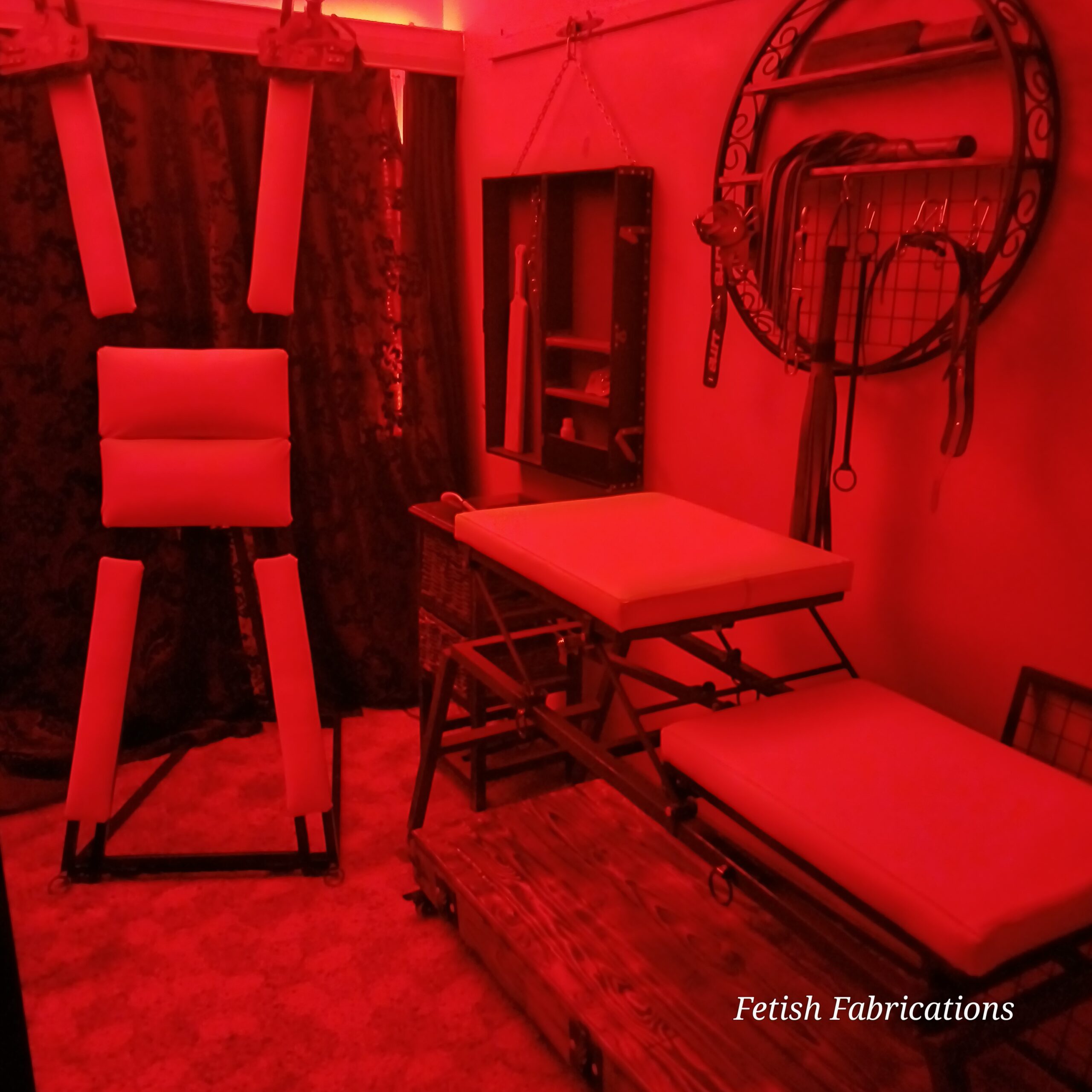
Consider furniture only after you understand the positions, anchor points, available floor space and the product's confirmed working limits.
- Measure the room and access route
- Confirm stability and attachment points
- Choose fixed or folding storage
03 Training first
Suspension and advanced restraint
Suspension introduces serious fall, nerve and circulation risks. Do not rely on a product page or video tutorial as training.
- Learn from a competent instructor
- Use equipment designed for the purpose
- Know emergency release procedures
Before you buy
A five-minute quality check can prevent an expensive mistake.
01
Construction Ask what the frame and joints are made from.
02
Edges and welds Check every skin-contact area for sharp or unfinished points.
03
Anchors Confirm attachment points connect to structural material.
04
Padding Look for cleanable, intact upholstery and secure seams.
05
Working limits Confirm the published limit for the exact piece and intended use.
During play
Pay attention to the person, not the plan.
Any honest BDSM beginner guide South Africa readers can use will say the same thing: agreement before a scene does not remove the need to watch, listen and adapt. Check in more often when equipment restricts movement, speech or circulation.
Comfortable to continue
Still communicate—green is not permission to stop checking.
Slow down and check
Change intensity, position, restraint or pause to talk.
Stop and release safely
Do not debate the word. Stop, assess and support.
Advanced does not mean better.
Neck restraint, breath restriction and suspension can cause catastrophic harm. This beginner guide does not teach those activities. Get competent, in-person education before considering them.
After the scene
Plan the return to ordinary life.
Aftercare is personal, and it is a core part of the BDSM beginner guide South Africa framework taught here. Agree beforehand what each person may want immediately after play and whether a later check-in would help.
Reconnect
Offer reassurance, quiet, touch or space according to what was agreed.
Hydrate
Water and a light snack may help after physically demanding play.
Warmth
Keep a blanket or comfortable clothing nearby.
Physical check
Look for unusual pain, persistent numbness or other concerning symptoms.
Debrief later
Discuss what felt good, what did not and what should change next time.
Follow up
A next-day message can catch delayed emotional or physical concerns.
Learn in person
Ask about the next beginner workshop.
Play With Me in Lonehill offers a private, judgment-free place to ask practical questions and see Fetish Fabrications furniture in person—a natural next step after this BDSM beginner guide South Africa. Contact them to confirm the next workshop date, format and price.
LocationPlay With Me · Lonehill
LevelBeginner-friendly
EquipmentFF pieces on display
Common questions
Questions beginners often ask quietly.
If your question isn't covered in this BDSM beginner guide South Africa, contact Fetish Fabrications privately. You do not need to share a public identity or know the correct terms.
Ask your questionCan BDSM be completely risk-free?+
No. Some activities have physical or emotional risks. Clear consent, sober decisions, appropriate training, suitable equipment and continuous communication can reduce risk, but cannot remove it entirely.
What equipment should a beginner buy first?+
Many people start with well-fitting cuffs, a collar or a simple sensation tool. As this BDSM beginner guide South Africa explains above, the right first choice depends on what you want to explore, how you will release it quickly and whether you can inspect, clean and store it properly.
How does a safeword work?+
Agree on it before play. Green can mean continue, yellow means slow down and check in, and red means stop. If speech may not be possible, agree on an unmistakable non-verbal signal.
Where can I see BDSM furniture in Johannesburg?+
Selected Fetish Fabrications furniture is displayed at Play With Me in Lonehill. Confirm opening hours or arrange a visit before travelling.
Can I hire furniture before buying?+
Selected pieces are available for hire in the Johannesburg area, subject to availability. Collection and return are through Play With Me in Lonehill.
Is consensual BDSM legal in South Africa?+
South African law on consent and sexual offences (see the Criminal Law (Sexual Offences and Related Matters) Amendment Act) can be complex and depends on the circumstances. This guide is general information, not legal advice. Ask a qualified South African attorney about a specific legal concern.
Fetish Fabrications · Gauteng
Built for real people, real rooms and informed choices.
This BDSM beginner guide South Africa was written for adults exploring privately and safely. Custom BDSM furniture and leather gear, made in-house in South Africa—private questions are welcome, whether you are ready to build or still learning.
Please note
For consenting adults aged 18 and over. This BDSM beginner guide South Africa is educational information only, not medical, psychological or legal advice. Use all equipment within its confirmed working limits, and seek qualified, in-person instruction before attempting advanced or high-risk practices such as suspension, breath restriction or impact play.